
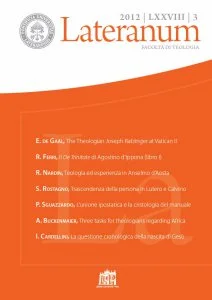
Description
Summary
Taking as its starting point the affirmation of the transcendence of the human person and the historical responsibility that this transcendence implies, this article examines Luther’s and Calvin’s theologies as they relate to this theme. The article will demonstrate how, while proceeding from a common ground, different features emerge in their writings. For both, the “righteousness” of the person exists in Christ and only there can it be seen. It shows itself in the believer through the vocation to which each person is called. The Calvinist concept of the “limit” of the person and the consequent reciprocity of the subject includes the concept of charity which is dear to Luther. The only way for the sinner (in the Lutheran and Calvinist sense) to transfer this dimension of “righteousness” externally, in public view, is to subject oneself to intense intersubjectivity. From this principle the necessity of the law is born, in particular according to Calvin.


Reviews
There are no reviews yet.