
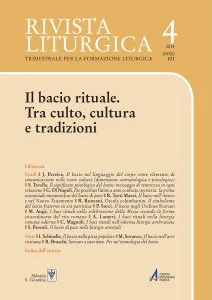
Description
R. Torti Mazzi pp. 703-720
Il bacio nell’Antico e nel Nuovo Testamento
Approvato nei commentari rabbinici solo in determinati casi, il bacio esprime in genere il sentimento dovuto a un legame di parentela o di amicizia (baci di incontro o di addio), ma talvolta viene utilizzato ipocritamente: per carpire la benedizione paterna (Gen 27,27), per ottenere un prestito (Sir 29,5), per uccidere un nemico (2Sam 20,9-10) o per tradire un amico (cf. il bacio di Giuda). Raramente si parla nell’Antico Testamento del bacio d’amore (Ct 1,2; 8,1-2), ma si mette in guardia dal bacio della seduttrice (Pr 7,13). Al di là dei rapporti personali, il gesto del bacio è simbolo della deferenza sia nell’ambito cultuale (è sempre condannato come gesto di adorazione idolatrica) sia in quello profano e politico: il «bacio di obbedienza» è un gesto di sottomissione documentato con frequenza nei testi accadici, cui si ricorre per comprendere alcune espressioni ebraiche che vi fanno riferimento. Nel Nuovo Testamento, oltre al bacio di Giuda, suscitano particolare interesse il bacio della peccatrice (Lc 7,36-50) e il bacio «santo», su cui più volte si insiste nei postscritti paolini.
The kiss in Old and New Testament
In rabbinical commentaries the kiss was approved only in some limited cases, but its significance is generally seen as an expression of a sentiment due to a link of kinship or friendship (kiss of an encounter or of a farewell). Sometimes it is used in a false way in order to get the father’s blessing (Gen 27.27), to get a loan (Sir 29,5), to kill an enemy (2Sam 20,9-10) or to betray a friend (cf. Judas’ kiss). The kiss of love is seldom told in Old Testament, but the is a warning about the kiss of a seducer woman (Pr 7,13). Beyond personal relationships, the gesture of the kiss is a symbol of respect within a worship rite (it is always condemned as a gesture of an idolatrous worship), as well within a political and secular milieu. The «kiss of obedience» is a gesture of submission, that is often documented in the Akkadian texts, to which we have to turn for understanding some Hebrew expressions that refer to them. In New Testament, in addition to the Judas’ kiss, a particular interest arises from the kiss of the sinner woman (Lk 7,36-50) and the «holy» kiss, that is many times mentioned in the Pauline postscripts.



Reviews
There are no reviews yet.